
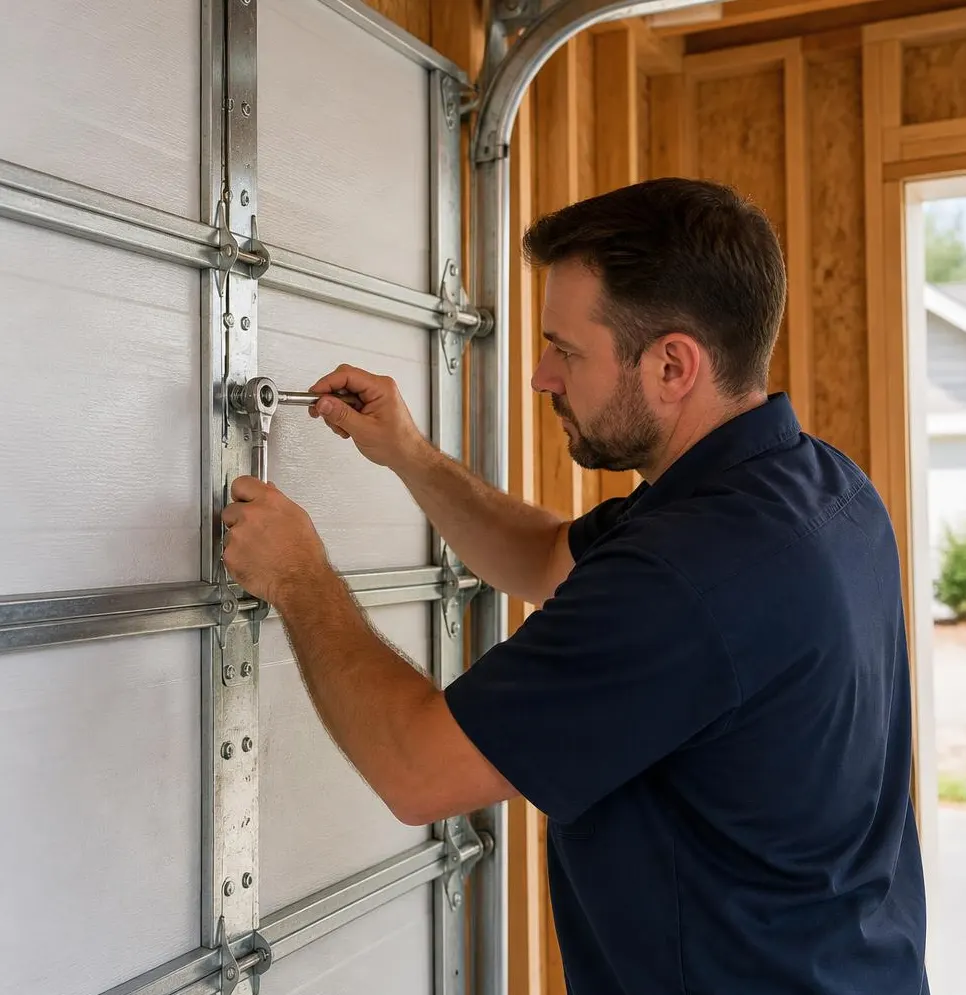
Short answer: pull the red emergency release cord to disconnect the opener, then lift or lower the door by hand using slow, even force. When power comes back, reconnect the carriage to the opener rail and run one full test cycle before trusting it with a vehicle in the way.
Power outages aren't rare around Rutherford County. Ice storms in late winter and the occasional remnants of a hurricane working their way inland can knock out electricity for hours, sometimes longer if lines are down on back roads near Bat Cave or Chimney Rock. If your garage door is your main way in and out, knowing how to operate it manually isn't optional knowledge — it's the difference between getting your car out and being stuck.
Tools You'll Need
- A step stool or ladder (for taller garage ceilings)
- A flashlight or headlamp
- Work gloves
- Someone to help lift, if your door is a standard double-wide — these are heavy
How to Open the Door Manually
- Locate the emergency release cord. It's the red handle hanging from a cord attached to the trolley on the opener rail, usually a foot or two from the top of the door.
- Pull the cord straight down and toward the door. This disconnects the trolley from the opener's drive mechanism, freeing the door to move independently.
- Lift the door slowly, using both hands spread across the bottom panel. A properly balanced door should rise with moderate, even effort and stay roughly where you leave it. If it feels unusually heavy, jerks, or won't stay up, stop — that's a spring problem, not a power problem, and forcing it can be dangerous.
- Prop the door open if you need it to stay up while you load the car or move things in and out, especially if the opener was your only way of holding it in place.
How to Close the Door Manually
- Grip the bottom panel firmly and guide it down rather than letting it drop. A balanced door will lower with light, controlled resistance.
- Make sure the door seats fully against the floor and latches if it has a manual lock. During heavy rain, a door that isn't fully closed lets water track in along the bottom seal, which is already working overtime against this area's humidity and runoff.
- Leave the opener disconnected until power returns — don't try to reconnect it in the dark or without visibility.
When the Door Won't Move by Hand
If the door is stuck, binding, or noticeably heavier on one side, don't keep pulling. That usually points to a broken spring, a bent track, or a roller that's jumped its channel — all of which need a technician, not more muscle. Continuing to force a door that's off-balance is one of the more common ways homeowners get hurt during outages.
Re-Engaging the Opener Once Power Returns
- Close the door fully by hand first. You want the door at the bottom of its travel before reconnecting anything.
- Pull the emergency release cord toward the motor unit (the opposite direction from how you disconnected it) to re-engage the trolley with the drive carriage.
- Press the wall button or remote to run one full open-close cycle with nothing in the doorway. Watch and listen — the door should move smoothly, reverse properly if it hits something, and stop cleanly at both ends of travel.
- Check that the safety sensors are aligned. A power outage can sometimes jostle these small eye-level units near the bottom of the track, especially if the ladder or anything else bumped them during the manual operation. If the opener refuses to close and the light blinks, misaligned sensors are the usual cause.
- Reset the clock or any smart features if your opener has them — some battery backup units reset settings after a full outage.
What's Fine for a Homeowner vs. What Needs a Technician
Pulling the release cord, lifting and lowering the door by hand, and reconnecting the trolley afterward are all well within normal homeowner territory — no tools beyond your hands and a flashlight. Where it crosses into technician work is anything involving the springs, cables, or a door that won't balance correctly on its own. Those components store a dangerous amount of tension, and a spring that lets go while you're adjusting it can cause real injury. If your door felt wrong during the outage — hard to lift, slow to close, grinding on one side — that's worth a call even after the lights come back on.
When to Call Lake Lure Garage Door
If reconnecting the opener doesn't bring it back to normal operation, or the door behaved oddly during manual use, it's time to get a second set of eyes on it. Our Garage Door Opener Repair & Installation service covers everything from misaligned sensors and worn drive gears to replacing an opener that's simply reached the end of its life — which matters if you're relying on it during the next storm. For doors that felt heavy, uneven, or hard to lift by hand, our Spring Replacement service restores proper balance so the door operates safely whether the power's on or not. We also recommend a seasonal Garage Door Maintenance visit before winter weather settles in, so small issues get caught before they turn into a dark-night problem.
If your garage door gave you any trouble during the last outage, don't wait for the next one. Call Lake Lure Garage Door and let a local technician make sure your door — and your opener — are ready for whatever Rutherford County's weather throws at them next.